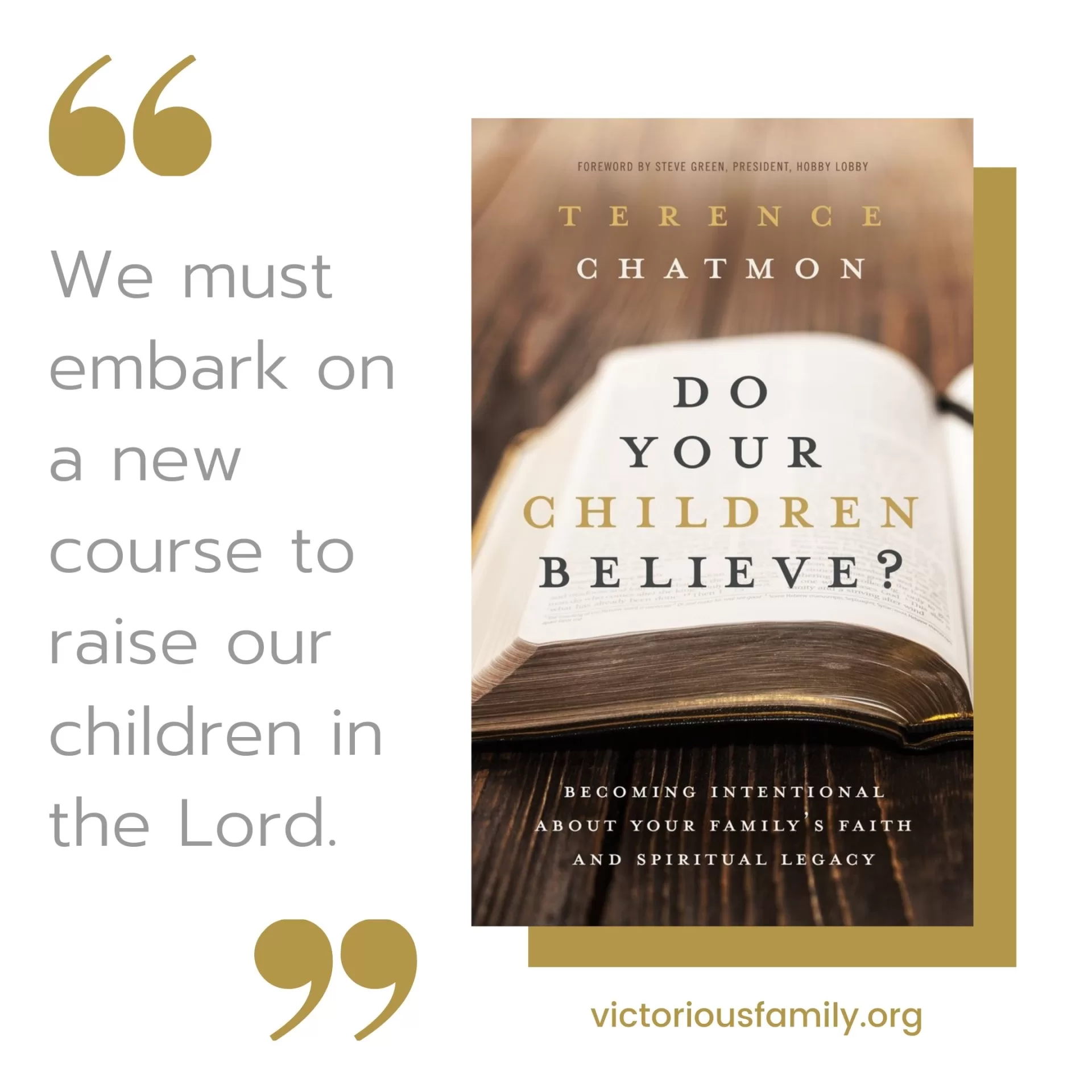
In the busyness of modern life, the path of least resistance often becomes the default for how we lead our families. We settle into routines that are familiar, methods we’ve inherited, and habits that are easy to maintain. When it comes to nurturing the faith of our children, this passive approach can feel safe, especially when church programming, youth groups, and Christian schools seem to fill the gap. But as Terence Chatmon challenges in his book Do Your Children Believe? family discipleship is not a responsibility we can outsource. It begins at home—with us.
Chatmon writes from the deep conviction that the spiritual foundation of the next generation is shaped not primarily by institutions but by intentional, Spirit-led parenting. And yet, so many families—even devout, church-going ones—fall into the trap of assuming that simply attending church or having good moral behavior equates to faith transmission. We choose the familiar rhythm: Sunday services, maybe a quick prayer at dinner, and occasional spiritual conversations when convenient. But as Chatmon boldly asserts, “If we fail to plan, we plan to fail.” The comfort of the status quo is no substitute for a purposeful, discipleship-driven family strategy.
The “path of least resistance” in parenting may feel efficient in the moment, but over time it proves ineffective for spiritual legacy-building. Children need more than passive exposure to faith—they need consistent modeling, biblical instruction, and heart-level conversations with the people they trust most: their parents. This is the heartbeat of Do Your Children Believe? —a call for families to take up their biblical mandate in Deuteronomy 6: “Impress these words on your children. Talk about them when you sit at home and when you walk along the road, when you lie down and when you get up.”
So, what does it look like to step off the path of least resistance and into the transformative work of family discipleship?
1. Begin with Vision
Chatmon encourages parents to craft a “Family Discipleship Plan”—a clearly defined vision for what they want their children to believe, value, and live out. This requires stepping back from daily survival mode to prayerfully imagine the kind of legacy they want to leave. What does a spiritually mature son or daughter look like at age 25? What beliefs and habits do you hope they carry? Without a target, we can’t aim. A written vision provides clarity and accountability, moving us from good intentions to intentional action.
2. Create a Spiritual Development Plan
Once the vision is clear, families need a practical plan to get there. Chatmon introduces a step-by-step process to help families build spiritual milestones into the everyday rhythm of life. This includes regular family devotionals, meaningful conversations about Scripture, and celebrations of spiritual growth. It’s not about perfection or performance—it’s about progress and presence. Even 15 minutes of intentional time each week can bear significant fruit when done consistently over years.
3. Model What You Want to Multiply
Children imitate what they see more than what they hear. If we desire them to pursue Christ passionately, we must show them what that looks like in our own lives. That means prioritizing our personal spiritual growth, openly sharing our struggles and victories in faith, and living with integrity. Chatmon’s own story—shaped by a personal awakening and a recommitment to lead his family spiritually—is a powerful testimony of how God honors obedience, even when it starts small.
4. Build a Culture of Faith at Home
The spiritual atmosphere of a home doesn’t have to be heavy or overly formal. It can be joyful, honest, and deeply relational. From bedtime blessings to dinner table discussions, families can use everyday moments to point children to Christ. Chatmon calls this “normalizing faith,” so children grow up seeing faith not as a Sunday event but as a daily lifestyle. Over time, this cultivates confidence, curiosity, and conviction in their hearts.
5. Partner with the Church—Don’t Rely on It Alone
Church programs are wonderful supplements, but they are not substitutes for discipleship at home. Chatmon emphasizes that parents are the primary faith trainers, and the church should come alongside to equip and support them in that calling. Ministries like Victorious Family (www.victoriousfamily.org/homekit) offer resources like the HomeKit and Family Discipleship Workshops to empower parents with tools, encouragement, and a like-minded community.
In the end, the question Do your children believe? is not just a reflection of their faith—it’s a reflection of how intentionally we’ve discipled them. Walking the hard path—choosing consistency over convenience, depth over distraction, and intentionality over inertia—is rarely easy, but it is eternally worth it.
The path of least resistance may feel safer today. But the path of intentional family discipleship? That leads to legacy. Let us dare to walk it—together.
Comments are closed.