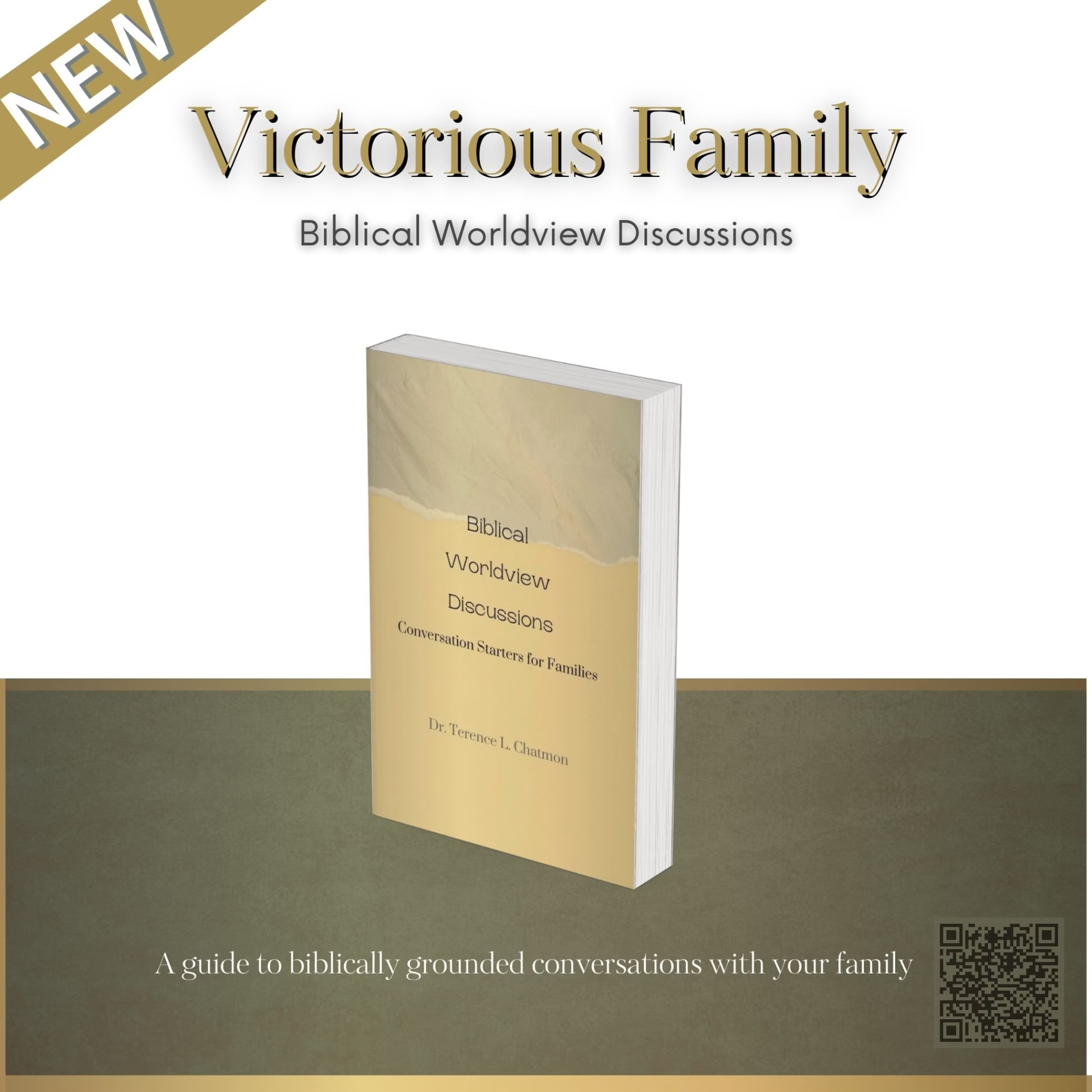
Rebuilding Biblical Worldview Through Family Discipleship: A Call to Action
The Crisis at the Core
Recent findings from the American Worldview Inventory, led by George Barna, reveal a sobering reality: biblical worldview alignment in the United States is not simply declining—it has collapsed. Across eight categories measuring belief and behavior, alignment peaks at just 19% and falls as low as 5% in foundational areas such as family and the value of life. Among younger generations, the situation is even more alarming, with Gen Z and Millennials registering between 1% and 4% alignment in most categories.
This is not a marginal issue. It is a systemic breakdown in how faith is formed, lived, and transmitted.
The data confirms what many leaders have observed anecdotally: the Church is not merely losing cultural influence—it is losing its ability to form a coherent, lived-out faith in the next generation. The implications are profound, affecting not only individual belief systems but also the stability of families, communities, and broader society.
Diagnosing the Breakdown
At the heart of this crisis is a shift in where worldview formation occurs. Historically, faith was cultivated through an integrated ecosystem of family, church, and community. Today, that ecosystem has fractured.
Research and field engagement point to three primary breakdowns:
1. The Collapse of the Home as the Primary Discipleship Center
Faith formation has been outsourced to church programs, even though worldview is primarily shaped through daily rhythms, relationships, and lived experiences within the home.
2. Cultural Narratives Outpacing Biblical Truth
Media, peer networks, and digital platforms now serve as the dominant shapers of identity, morality, and purpose—often in direct conflict with biblical teaching.
3. Discipleship That Prioritizes Information Over Integration
Even among engaged believers, there is a gap between what is professed and how people actually live. This disconnect has produced what researchers describe as a wide gulf between “Integrated Disciples” and the broader population.
A Two-Fold Missional Challenge
To address this crisis, a differentiated approach is required:
1. The Unchurched: “ABCs and 123s” of Faith
A growing segment of the population lacks even a basic understanding of biblical concepts. Engagement must begin with accessible, relational, and practical entry points into faith.
2. The De-churched and Under-Equipped: “Search and Rescue”
Many individuals have disengaged due to disillusionment, irrelevance, or lack of meaningful formation. Re-engagement requires authenticity, trust-building, and a renewed focus on lived discipleship.
At the same time, particular attention must be given to influential cultural segments—especially families who shape norms, values, and intergenerational patterns within their communities. Strengthening these households creates a multiplying effect that extends far beyond individual transformation.
Research-Informed Pathways Forward
Emerging research highlights several critical insights:
• Parents and grandparents remain the most influential voices in a child’s spiritual development—when equipped and engaged.
• Relational discipleship consistently outperforms programmatic approaches in producing lasting transformation.
• Younger generations are open to spiritual exploration, but require authenticity, relevance, and safe spaces for questions.
• Faith formation is most effective when integrated into everyday life, not confined to weekly gatherings.
These findings point to a clear conclusion: any meaningful solution must begin in the home.
A Practical and Scalable Solution
One proven pathway for restoring biblical worldview formation is equipping families with simple, consistent, and relational tools for discipleship.
The work of Victorious Family offers a practical model through its HomeKit resources, designed to help families establish rhythms of faith within everyday life. These tools emphasize:
• Connection – building strong relational foundations within the family
• Formation – engaging Scripture and spiritual practices in age-appropriate ways
• Application – integrating faith into daily decisions and behaviors
In parallel, the framework outlined in Do Your Children Believe? provides a clear roadmap for parents and grandparents to take ownership of spiritual leadership in the home. The book challenges families to move beyond passive faith transmission toward intentional discipleship that shapes both belief and behavior.
A Framework for Biblical Worldview Formation
A critical missing link in current efforts is not just that worldview should be formed, but how it is formed.
The Biblical Worldview Guide developed by Victorious Family provides a clear and practical framework for addressing this gap. Rather than treating worldview as abstract theology, the guide helps families and leaders understand how biblical truth shapes everyday life across key domains such as:
• Identity and purpose
• Family and relationships
• Truth and morality
• Faith and daily decision-making
This framework translates belief into lived practice—helping individuals move from passive agreement to active alignment. It also creates a shared language that can be used across homes, churches, and communities, reinforcing consistency in formation. Together, these resources offer a scalable, replicable approach that can be implemented across churches, communities, and networks.
A Call to Action
The data is clear, but so is the opportunity. This moment represents not only a crisis but also a catalytic turning point. The erosion of biblical worldview has exposed the limitations of past approaches, creating space for a renewed, more effective model of formation. The path forward is both simple and profound: restore the home as the center of discipleship.
By equipping families with practical tools, fostering authentic relationships, and committing to long-term formation, it is possible to reverse current trends and build a resilient, faith-filled generation. The question is no longer whether the Church has the resources to respond. It does. The question is whether it will embrace the responsibility—and the opportunity—to act.
Comments are closed.